Tampilkan postingan dengan label China. Tampilkan semua postingan

Minggu, 11 April 2010

Going It Alone: How to Make Your Stuff In China, Part 2


Adam Hocherman, 34, is an entrepreneur and founder of the consumer electronics company American Innovative in Boston, MA. Adam founded the company in 2003 with the help of the US Government’s SBA loan program and is currently the 100% owner. He holds a BS in Mechanical Engineering and an MBA, both from Cornell University. Adam’s writings can be found on his blog at DesignTheatre.net and through his Twitter feed. He welcomes your comments. Read more about sourcing in China here.


Read Part 1 of this series.


I am sitting in the lobby of the Royal Plaza Hotel in Mong Kok waiting for the owner of the factory that makes our Neverlate and Quad-Timer items to pick me up. The final legs of my journey were largely uneventful although it was nearly 2am local time before I finally closed my eyes to go to sleep last night. Dealing with the jet lag on the way out is easy. I basically stayed awake the entire time, dozing in out of a half-sleep the way that someone who is over six feet tall does on airplanes. Some five small airplane meals later, I had lost track of what meal I was supposed to be on. Acclimation to the time zone on the way back is much more difficult and if you’ve ever been to the International Pavilion at the CES you can attest to this first-hand through the observation of countless sleepy Asian booth attendants nodding off in uncomfortable plastic rented chairs.


Before I continue where I left off from last time, I’d like to pause to address the question that was the inspiration for writing this article. That question is why? Why “go it alone”? Why take the route that I’ve taken rather than license your idea (actually, let me be more specific – your product concept) to another party? I am of the opinion that there is a place for licensing, but it is not for low cost – say, sub $100 – consumer products. If you have a proprietary technology – something that you embed in another product then, by all means, license it. If you have an idea for a consumer product and the desire/willingness to put for the effort to bring it to market, then you should go it alone. The reasons are many, but the main ones are (1) IP, (2) margin and (3) control. Let me speak to these one at a time.

1) IP, or intellectual property. There are proponents and critics of the US intellectual property process and I would definitely fall into the category of proponent. That said, I know first-hand the realities of obtaining a strong US patent for a consumer-type device. Anyone can file for and receive a utility patent but there is a vast chasm between that and receiving a utility patent that is useful or, in patent parlance – “strong”. If you plan to license your device, then at a minimum you need a stong patent – one that is defensible in a court of law. While you may not be able to read and make sense of the claims for a utility patent, you may rest assured that counsel for the company you are attempting to license your concept to can and will. Aside from the fact that patents are time-consuming to write, and ultimately expensive to file, many great product ideas simply are not patentable in a manner that will serve the end that you have in mind. Take, for example, a very cool toy that I saw while mining for new ideas in a Hong Kong Toys ‘R’ Us store. It’s a children’s train set similar to the wooden track toys of my youth. What’s cool about it? Instead of plastic or wooden track, it came with a pulp-maker and a set of press molds. The child grinds up newspaper and makes pressed track sections using the kit, which are then assembled for the battery-operated train. Is it a brilliant take on a new “green” toy? Absolutely. Is the idea of molding paper pulp into train tracks patentable? In the eyes of the USPTO probably not or, at best, very very narrowly (i.e. a patent that the inventor of this toy might be granted will probably not be broad enough to protect against a host of similar knock-offs).


2) Margin. Speaking now from the perspective of the licensor – product margins on consumer electronic products are thin. Manufacturing costs continue to rise, consumers (that’s you!) continue to demand rock-bottom prices and retailers remain stubborn in maintaining their, often very aggressive, margins. The result is that the guy in the middle gets squeezed. There is more room in some product segments than others but for electronics it can be hard to make the numbers work. As such, the idea of handing over an additional percentage to a product entrepreneur who walks through the door with not much more than an idea (and this happens to me once or twice a month) is not very attractive.


3) Control. Licensing an idea necessarily means relinquishing some degree of control over its final implementation. And that’s fine for some but not for me and maybe not for you. After all, your product is your baby and no one else is going to develop it in just the way that you want. I respect what Chris Hawker did with his PowerSquid product (see related CrunchGear series). In fact, it was his article that inspired me to reach out to CrunchGear. However, you need only read his series to get a feel for the pain that he experienced. While ultimately successful in his endeavor, it wasn’t clear to me that Chris felt very satisfied with the end result. It may have just been my interpretation of his story but I got the feeling that had he to do it over again, he may have tried his hand at bringing the PowerSquid to market independently.


Now all of this is not to say that doing it my way is all a bowl of fruit. It definitively is not. One nice thing about licensing that is not true of bringing a product to market on your own is that someone else manages the marketing, sale, customer service, accounting and logistics of your product once it is “done”. Albeit at a great cost, but it is one way to see your idea come to fruition without having to spend the rest of your life dribbling it up the court, as I must.


So what exactly, you must be asking by now, is involved with sourcing this thing yourself? Ultimately what all of this productizing boils down is execution. What I mean by this is the “putting of the one foot in front of the other”. There are lots and lots of little steps involved and it takes a detail-oriented demeanor to get it done right … to get it done at all, in fact.


Alright, back to the task at hand. One step at a time. When we left off at the end of the previous installment, you had a “long list” of possibly appropriate factories that you located on GlobalSources.com and a decent product specification. Hang onto your product spec for the moment. The next step is to blast off an RFQ to the members of your long list using the automated features of GlobalSources.com to do so. The automated RFQ (or you can manually email to the listed contacts, if you prefer) is a teaser.


The form fields will ask you to describe your project and you should do so at a high-level. Be sure to clarify that you’re not looking to purchase and private-label an existing product that the manufacturer produces but that you have an OEM project (a custom, ground-up design) that you’d like to discuss.
Your RFQ blast should result in a decent response rate. You’ll typically hear from one of the company’s marketing or project managers. This is typically a young woman (but not always) that has a good command of the English language and a decent grasp of the technical process behind developing a custom product. She is the liaison between you and non-English speaking members – management and/or engineering – of the factory. She may even ultimately be your main contact for the duration of the project, depending on the factory.


Next you want to request that the factory sign an NDA (Non-Disclosure Agreement) before you send over your product spec. Get one off the internet. The NDA is basically non-enforceable, in practice, but you should send it anyway. The factories know this, but sending the NDA (a) makes you appear serious about your idea and the protection of your IP – which you are and (b) is a handy way to take a first pass at eliminating factories that are not serious about working with you. This small bit of admin will quickly separate those that are genuinely interested in hearing more from you from those that aren’t.


If you started with 12 factories on your long list, you’re probably now down to five or six. Send these factories your product spec attached to an e-mail describing your interest in working with them. You should reasonably expect two to four legitimate quotations to result from the dialog that remains with the factories that signed your NDA. Some will determine that they’re not a good technical fit for what you’re after, others will simply lose interest. Along the way they’ll ask you questions that you don’t know the answers to, like: What will be your initial order quantity? What’s your target FOB cost? What does FOB stand for anyway? (they won’t really ask you this, but you should know). These are all questions that are elusive to a first-time product designer, but questions that have easy answers … perhaps in the next installment that I write?


View full post on CrunchGear

Going It Alone: How to Make Your Stuff In China


Adam Hocherman, 34, is an entrepreneur and founder of the consumer electronics company American Innovative in Boston, MA. Adam founded the company in 2003 with the help of the US Government’s SBA loan program and is currently the 100% owner. He holds a BS in Mechanical Engineering and an MBA, both from Cornell University. Adam’s writings can be found on his blog at DesignTheatre.net and through his Twitter feed. He welcomes your comments. Read more about sourcing in China here.


It’s Saturday morning at 6am. I’m about to leave my Boston apartment for the first of three legs from Logan International Airport to Hong Kong via New York and Tokyo. I will arrive at 10:30pm on Sunday. Against insurmountable odds it appears that both my Boston and New York flights are on-time – an anomaly if there ever was one given that we’ve had a full week of driving rain in Boston and two feet of snow in Westchester County, just 45 minutes north of New York City where my parents told me they’ve had to sleep at a friend’s place because they’ve been without power for days. Still, never to disappoint, and despite clear sunny skies, my commuter flight from Boston to New York is delayed almost two hours on account of “missing personnel.” This conjures up images of airline top brass scrambling around to replace the guy who’s responsible for loading the salty snacks on the plane (as if) when the gate agent clarifies that our secondary officer is on his way from another city. Or maybe he overslept. Fortunately, having learned my lesson just months ago when traveling to a trade event in Las Vegas (my luggage was lost, never to be recovered to this day!) I seemingly accurately surmised that the chances of my checked baggage successfully navigating three airplanes and two carriers would be slim-to-none. As such, I had packed light. My fiancee made me pack two pair of pants, which I felt to be overkill, but I have a feeling I’ll thank her later.

So if you think you can’t fit a week’s worth of clothing into 75% of a roller carrier-on, then you’d be wrong. The other 25% of my bag is filled with a menagerie of loose electronic components, busted circuit boards from my company’s products that I want to return to the factory for analysis and a dozen rare, Russian-made numeric display components called Nixie tubes which are to be part of a forthcoming American Innovative product. As I remove my shoes for the usual TSA security dance I muse about the fact that I still have to unpack my laptop but the Kindle, iPod, BlackBerry and myriad of electronic components I’ve just described do not need to be unpacked. However, TSA has the last laugh when they flag the Nixie tubes as suspicious looking and pull me and my bag aside for further investigation. I am secretly pleased that TSA seems to be doing their job and then momentarily scared as the agent swabs down my box of gadgetry for a scan. The Nixie tubes I have on me are what are known as NOS (New Old Stock). In this case, this means that these tubes were made in communist Russia some fifty years ago although they were never installed. Who knows what else they were making. Still, I breathe a sigh of relief as I pass the scan and am freed to go.


Such is the life of a gadget manufacturer and if you think all of these Kindles, Blackberries, iPods, and even Nixie tubes are made by robots in some far off factory, you’re wrong. I learned, first-hand, how difficult – and how rewarding – the art of Chinese manufacturing has become.


Where I’m going in China, I don’t go as a tourist. The industrial zone is not a pretty place. You can’t rent a car, even if you wanted to. There is no public transportation. Pick-ups and drop-offs are pre-arranged with factories. The good news is that the factories love when I visit or, for that matter, when any Westerner visits. There’s a certain hospitality that can be found doing business in China that doesn’t exist to such a great extent in the United States. They book the hotels for me, all meals are provided. They roll out the proverbial red carpet when I visit, which is nice.


The best way to source a factory in China is to go there. For every would-be product entrepreneur whose wind I just took from your sails … relax. In fact, that is not the way that I sourced the first three factories that I ever worked with and I still work with each of those facilities to this day. I am looking forward to seeing factory owners, project managers and engineers, some of whom I’ve worked with for almost seven years.


Before I tell you how I sourced those first three factories, I want to speak to the cover article of last month’s issue (Feb, 2010) of WIRED magazine about the “New Industrial Revolution”. Like many people probably reading this article, WIRED is my favorite magazine. I read it cover to cover every month and have been doing so since almost the inception of that fond rag. In that article, “Atoms Are the New Bits”, the folks at WIRED make it out like all that’s needed these days to make and sell a product is to dial up AliBaba.com, find a factory in Asia, throw a napkin sketch at them and wait for your container of packaged corporate job freedom to arrive in America. If this were true, I would not be so willing to write this article and to give you a little peak into the secret sauce that makes my company, and other companies like mine, possible today.


Ok, so the AliBaba.com part is true. Personally, I prefer a competitive directory called GlobalSources.com but it’s about the same thing. Thousands of manufacturers have listings and photos of OEM items that they specialize in. So your first step is to perform a search for similar items – or rather, items that may be made similarly. American Innovative’s first product was an invention of my design called the Neverlate 7-day Alarm clock. In short, it is a clock radio that was designed with college students in mind – and facilitates a separate alarm setting for each day of the week in order to accommodate class schedules.


Not surprisingly, I searched for manufacturers that made clock radios and not electric motors or stuffed bears. Seems obvious, right? Well in the case of the Neverlate it was but we’re about to release a new item that is a handheld USB device with a dot-matrix screen, which we call the PBA (Personal Baby Assistant). It’s designed to help parents of infants collect data about their newborns – sleep and eating patterns, medication administration, etc. Well who makes one of those in Asia? Hopefully no one. (Aside: If you happen to find your invention during your search for a manufacturer you may want to reassess how unique your idea is. Hopefully you’ve vetted your concept long before when you performed a detailed prior art search, but that’s a whole other article for another day). If your concept is truly new then your process is the same, but you need to be a little more creative. Recall the witch scene in the 1975 movie Monty Python and The Holy Grail. What else (besides a duck) floats? Very small rocks. What else is small and electronic, has a screen and a USB port and some buttons? An MP3 player. A fancy bike computer. A heart-rate monitor. Countless things. A factory that has some experience with these items may be a good candidate to investigate further. Find a dozen such companies and make a list. You’ve completed step one – the long list.


The next step is a little harder. You need to turn the long list into a short list and here’s how you do that. Get out your spec. You do have a spec, right? Ok, get out the napkin sketch. Now open a Word document and write down exactly how your product operates from a user perspective. What do the screens look like? How does the unit respond when buttons are pressed? What are the expectations for brightness, battery life, audio quality if you’re doing a hi-fi or talking device, textile quality and texture if you’re doing a cut-and-sew, materials safety, and so forth.


Sound difficult? It is if you’re not serious about your product. If you’ve been lying awake nights dreaming about making this widget, then you’ve already done the hard part – now put it down on paper. How about the external design? Regrettably it is outside the scope of this article to get into too much minutia on this subject but suffice to say that good visuals will both result in a final product that is closer to the vision in your mind and will lead potential manufacturing partners to take you more seriously. After all, it may be China but a napkin sketch there is perceived the same way a manufacturer would perceive a napkin sketch here. Do yourself a favor. Go to Coroflot.com and spend a few hundred dollars to have a bright freelancer or a RISD student work you up some drawings or, better yet, a basic 3D model. Whoa. You want me to spend money? Regrettably yes. And if you’re not willing to spend three hundred dollars for drawings then you should not be proceeding down the “go it alone” path. The trick is to spend smart money. Some good eye candy is excellent bang for the buck, particularly if it’s a 3D Alias model (which can directly feed the mechanical design stage someday).


Ok, spec in hand, it’s time to turn that long list into a short list. Stay tuned for the second installment, coming tomorrow.


#gallery-1 {
margin: auto;
}
#gallery-1 .gallery-item {
float: left;
margin-top: 10px;
text-align: center;
width: 25%; }
#gallery-1 img {
border: 2px solid #cfcfcf;
}
#gallery-1 .gallery-caption {
margin-left: 0;
}


View full post on CrunchGear

Kamis, 08 April 2010

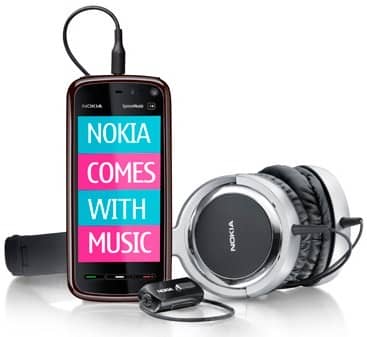
Nokia Comes with Music Download Service Finally Comes DRM Free in China


Since the Nokia Comes with Music service was launched back in December 2007, Nokia has come under scrutiny for using DRM to ‘protect’ it Comes with Music offering. Well, it would appear that Nokia have listened to the industry sceptics and have now launched their Comes with Music service in China without any DRM at all.


So what does this mean? Well, instead of having to previously illegally take the DRM off to play your download content on devices other than your PC and Nokia Comes with Music handsets, you can now download the music without having to go through all the painstaking rigmarole to make your music compatible with other devices. Another positive thing to come out of it is that you can keep the tracks for life after your subscription expires.


There is talks this could also be launched in India, however there is no news as of yet regarding when the DRM-free music downloads will be available in Europe and the US. We’ll keep you updated as more information comes in.


Via Engadget


More Details: Nokia


Gadget Gift Ideas

If you like what you’re reading then learn more about joining our FREE newsletter here. Lucky readers will win some fantastic gadget prizes!

Also, check out our recession busting gadgety money saving ideas.


addthis_url = 'http%3A%2F%2Fwww.gaj-it.com%2F17346%2Fnokia-comes-with-music-download-service-finally-comes-drm-free-in-china%2F';
addthis_title = 'Nokia+Comes+with+Music+Download+Service+Finally+Comes+DRM+Free+in+China';
addthis_pub = '';

Nokia Comes with Music Download Service Finally Comes DRM Free in China is a post from: UK Gadget and Tech News, Reviews and Shopping Site - Gaj-It.com


View full post on UK Gadget and Tech News, Reviews and Shopping